Cady shoots Jamie Bowden
The ExecutionersCady shoots Jamie Bowden is the central act of violence in John D. MacDonald's The Executioners, the moment when Max Cady's campaign of psychological terror against the Bowden family escalates into a direct attempt at murder. Firing a scoped rifle from a rock ledge on Shadow Hill, Cady wounds twelve-year-old Jamie Bowden in the upper left arm as the boy stands near the mess hall at Gannatalla camp. The shot, which nearly kills the child, transforms the family's siege from a series of menacing gestures into a concrete, life-threatening attack, and it provides the forensic evidence that finally allows Sam Bowden and the authorities to identify Cady as the perpetrator. The event marks the point of no return in the novel, driving Sam toward his plan to kill Cady and culminating in the final confrontation where Sam shoots Cady dead.
The Shot and Its Circumstances
The attack occurs on the last day of July, the final day of Jamie's camp session, the day Carol Bowden was to have driven down to pick him up and take him back to Suffern with her. The phone call from Mr. Menard comes through on Wednesday at ten in the morning, and when Sam realizes who is calling, he feels as though his heart had stopped. Mr. Menard's first words are that Jamie has been hurt but that it is not serious; when pressed, he reveals the boy was shot. The wound is on the inside of Jamie's upper left arm, about three inches above the elbow, and it made an ugly gash. Jamie lost blood and was naturally scared, but he boasts to his father that he did not make a sound when they sewed it up, and that he got six stitches. He is already eager to tell the kids at home about the real bullet that hit his arm and went through the shed next to the mess hall, right in one side and out the other, and he hopes to have it mounted on one of those little wooden things under glass in his room once the sheriff is through with it.
The Forensic Investigation
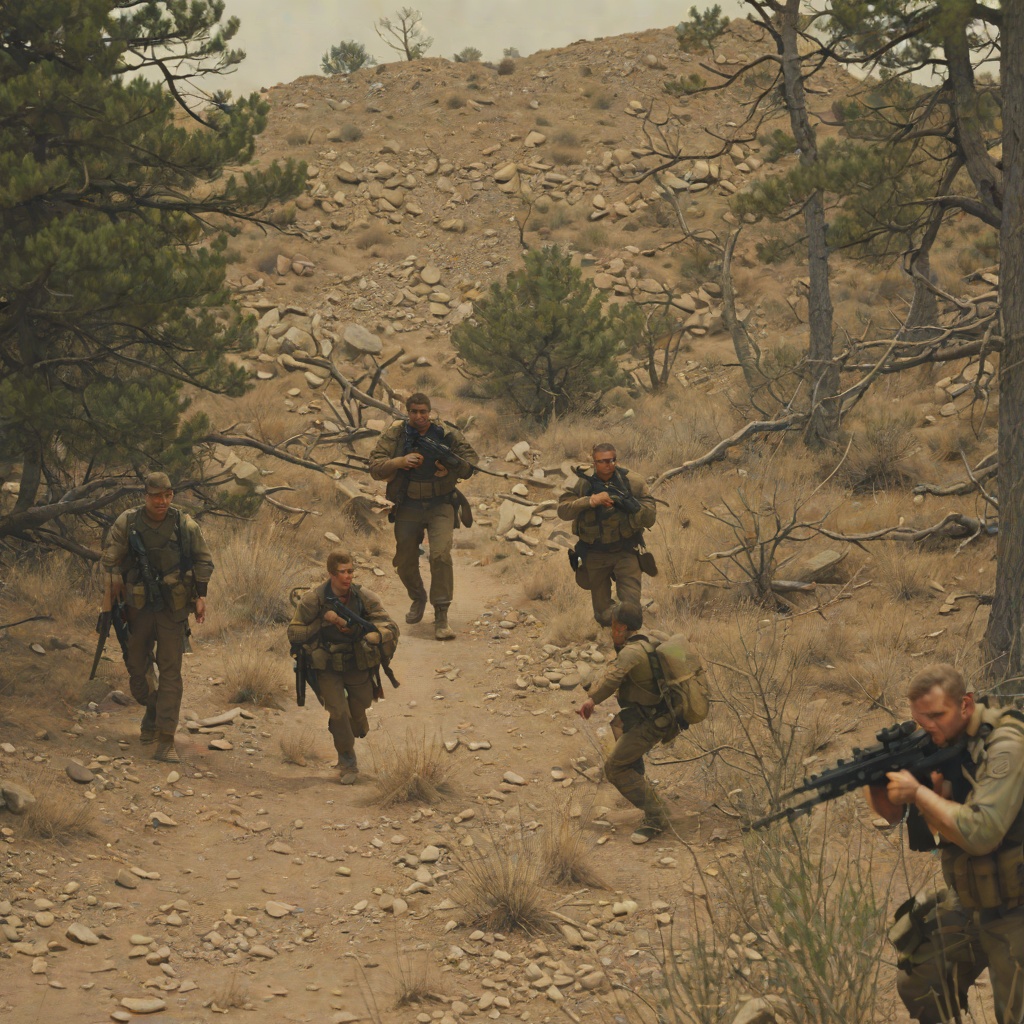
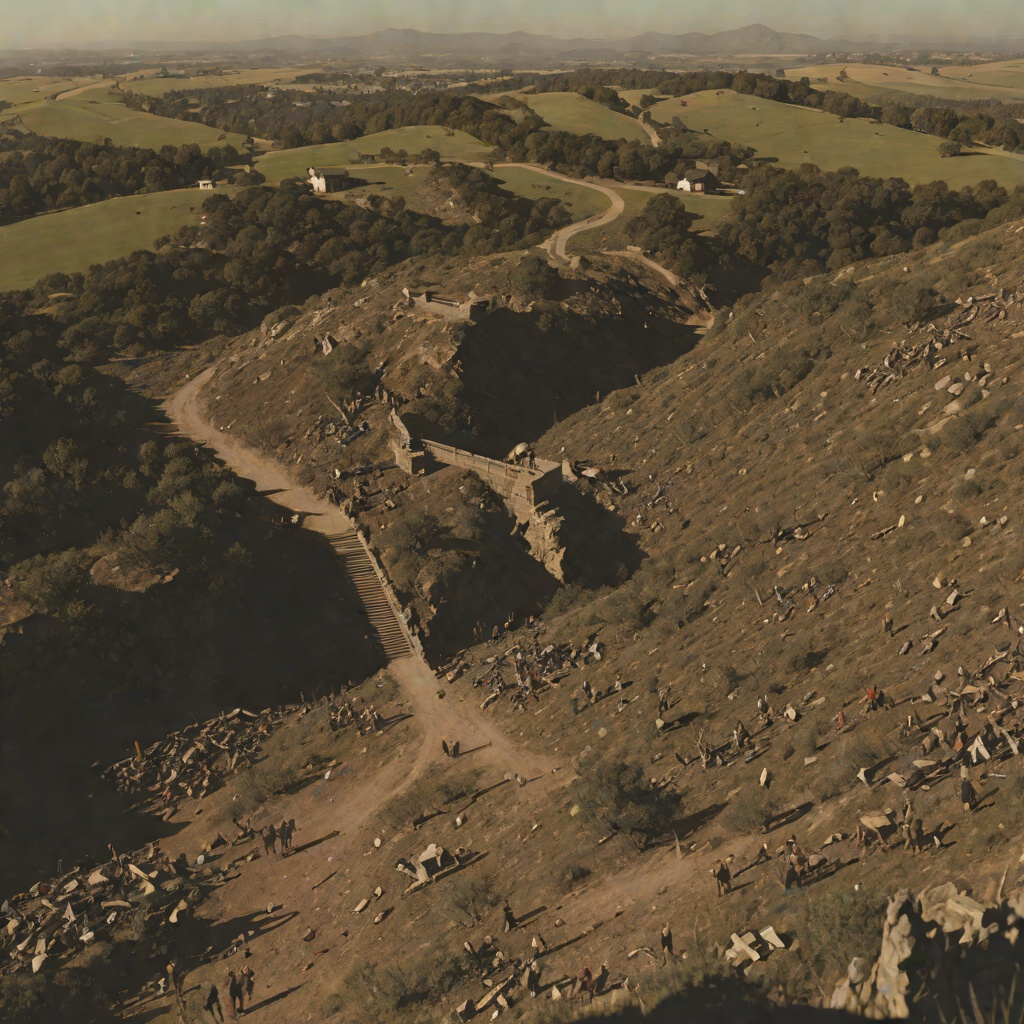
The investigation of the shooting reveals the precision and near-fatality of the attack. The range was about seven hundred yards, downhill, and with a good rifle and a good scope and a knowledgeable man, it is not a tough shot at all. The sheriff explains that if the wind had not been cutting up too much, nearly every shot could be placed in a circle about half again as big as a pie plate. The boy's arm was close to his side, the wind was a little gusty from the south, and the boy was facing east, so it looks like one of those gusts drifted the slug over a few inches. The sheriff is blunt: nobody was trying to scare the boy; they made a pretty good try at killing him. If the slug had gone two and a half inches further to the right, the boy would have been dead before he could fall all the way down. The bullet missed and put two holes in the shack, which gave the investigators a line of sight up the side of a knoll the kids call Shady Hill. Deputy Ronnie Gideon, a good boy who knows the woods and can read track, is left working on it, and he finds the place where the man with the gun was when he took aim: a rock ledge in a prone position, about thirty feet from the road up there, where the moss on the rock had been matted and was still springing back up. There were no car tracks and no empty cartridge case, but the deputy did find a chewed cigar butt that had been rubbed out on the rock, its mouth end still soggy. The sheriff notes that if the boy had been killed, they would be sending it along to the lab to see if they could get a type on the saliva, but he does not see as how it does much good. Sam's response is simple and damning: Cady smokes cigars.
The Confrontation with the Sheriff
The sheriff confronts Sam directly with the implications of the shooting. He states that they were too late for any road block because they did not know what to look for, and he understands that Sam can tell them who to look for. Sam admits he cannot prove Cady fired the shot, and he cannot prove Cady poisoned their dog, but he knows it was Cady both times. The sheriff's analysis is unsparing: the shot was a professional attempt at killing, not a warning, and the only reason Jamie survived was the wind drifting the slug a few inches. This conversation forces Sam to confront the reality that Cady has moved from intimidation to attempted murder, and that the legal system, which has been unable to protect the family, now has a concrete crime to investigate, even if proof remains elusive.
The Aftermath and Sam's Resolve
The shooting of Jamie is the catalyst for Sam's most extreme response. He tells Carol that he has been up one side of this and down the other, and that he wants to kill Cady. When she tries to dismiss this as a figure of speech, he insists it is not: he means that he wants to plan it all out and lay a trap and kill him and dispose of the body. He wants to commit murder, and he thinks he knows how it can be done. Carol stares at him for what seems a long time, and then she looks away, as though in shyness, and corrects him: not murder, but execution. This exchange marks the moral turning point of the novel, as Sam abandons the hope of legal recourse and embraces vigilante justice, with Carol's tacit approval reframing the act as justified killing rather than murder.
The Final Confrontation and Death of Cady
The shooting of Jamie ultimately leads to the final confrontation in which Sam kills Cady. After the chase, Ricardo, the man who helped Sam, tells him that they started finding blood halfway up the hill, a lot of it, and that one of Sam's last two shots must have hit Cady, tearing his right arm on the inside just below the armpit and tearing an artery open. Cady climbed another three hundred feet before he ran out of blood. Sam looks at the body as they roll it back onto the stretcher, a blade of grass pasted to the lips, and searches through himself for guilt, for a sense of shame, and finds only a sense of savage satisfaction, a feeling of strong and primitive fulfillment. All the neat and careful layers of civilized instincts and behavior are peeled back to reveal an intense exultation over the death of an enemy. He thanks Ricardo tonelessly, and as he walks back to the house, he hears Jerry Jacks on the phone saying that Cady is dead and that it was Bowden who did it. Sam Bowden, who had wanted to throw his head back and yell at the sky, who had wanted to dance around the body and chant of the defeat of the enemy, sits down listlessly, the sudden weakness of the aftermath overtaking him.
The Significance of the Attack
The shooting of Jamie is the event that exposes the true nature of Cady's threat and the limits of the law. It is the culmination of a campaign that began with Cady's release from prison and his return to New Essex, and it follows a series of escalating attacks: the poisoning of the family dog, the assault on Bessie McGowan, the fight with the three thugs, and the loosening of the station wagon's wheel lugs. Each of these acts was designed to terrorize the Bowdens without providing proof of Cady's involvement, and the shooting of Jamie follows the same pattern, leaving only a chewed cigar butt as evidence. Yet the attack also reveals Cady's psychopathy, his willingness to kill a child to punish the father, and it forces Sam to abandon his faith in the legal system and take the law into his own hands. The event is thus the hinge of the novel, the moment when the Bowden family's siege becomes a matter of life and death, and when Sam's moral crisis reaches its breaking point, leading to the execution that the novel presents as both a personal and a primitive fulfillment.